
Parrots or Psittacines (order Psittaciformes) includes about 353 species of bird which are generally grouped into two families:
- the Cacatuidae (also called cockatoos), and
- the Psittacidae (also called true parrots).
All members of the order have a characteristic curved beak shape with the upper beak having slight mobility in the joint with the skull and a generally erect stance.
FREE Training to Stop Your Bird's Biting
Get FREE access to Beak School – the only system designed to train your bird. Stop behavioral problems like biting, screaming, feather plucking.
Get the Free TrainingAll parrots are zygodactyl, having the four toes on each foot placed two at the front and two back. In length, parrots range from the buff-faced pygmy parrot of New Guinea at 8.4 cm (3.3 in) to the hyacinth macaw of South America at 100 cm (39.4 in).
A list of all parrots by common name in alphabetical order
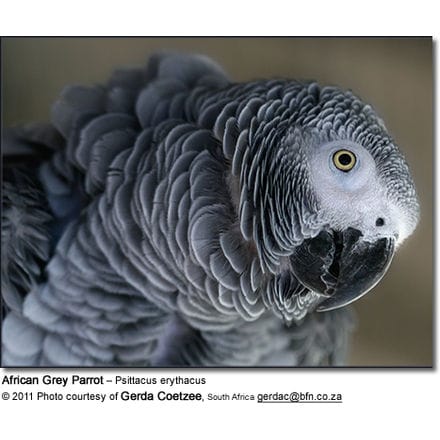
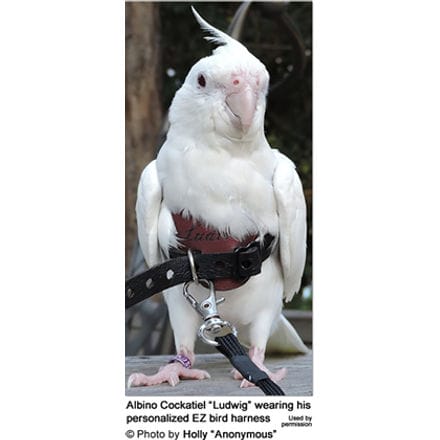
Interesting facts about parrots
- Physical Peculiarities: Parrots are able to see ultraviolet light, which is invisible to humans. They are the only bird species that can use its “foot” to bring food to its mouth. Most parrots sleep rest on one foot.
- The most famous parrot is the African Grey called Alex. Dr. Irene Pepperberg purchased him from a pet store hoping to disprove that Parrots were just mimics. Alex has shown amazing cognitive abilities, being able to name more than 100 objects, actions and colors. Alex was able to identify certain objects by their particular material.
- The most talented talking bird: A budgie called Puck officially became known as the bird with the most words, being able to speak over 1,700 words.
- The largest parrot in the world is the Hyacinth Macaw.
- The heaviest parrot in the world is the Kakapo, also commonly referred to as Night Parrot or Owl Parrot.
- The only truly nocturnal (active at night) parrot species is the Kakapo
- Parrots often use their left foot in handling food and in grasping branches and other things (such as toys), while they use the right foot to support their body. It appears that this seems to be based on the same principle as the preferential hand that humans utilize.
- Self-medicating: Some South American parrot species (Conures, Amazons and Macaws) have been observed to regularly eat clay from clay cliffs. Originally it was believed that they did so to obtain minerals their diet might not otherwise provide. However, research suggests that the clay helps to detoxify them. Sometimes the seeds they eat contained toxic elements or even to alleviate poisons the farmers put out to rid themselves of these birds that they have come to consider pests, as they feed on their crops.
- Nesting Behavior: Parrots generally nest in tree cavities, cliffs, cacti, or human-built structures. However, the Quaker Parrots build their own nests and they LINK their nests together to form structures akin to “bird condominiums” with individual chambers and separate nest entrances for each pay. These nesting structures can be the size of a small automobile and weigh 200 lbs (91 kg) or more. The Patagonian Conures nests are burrows set deep into earth cliffs.
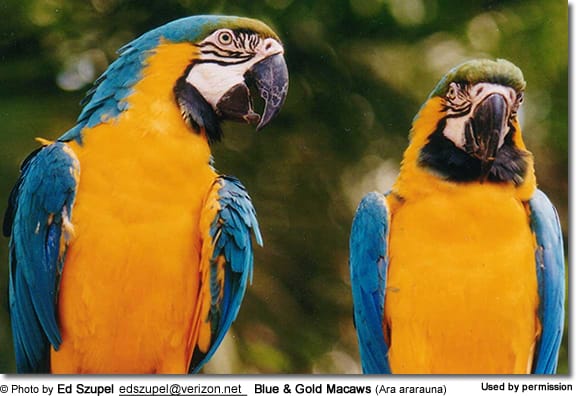

Distribution
Parrots can be found in most of the warm parts of the world, including India, southeast Asia and west Africa. By far the greatest number of parrot species, however, come from Australasia, South America and Central America.
The Thick-billed Parrots (Rhynchopsitta pachyrhyncha) is one of only two species native to the United States – the other being the now extinct Carolina Conure. The Puerto Rican Amazon is the only remaining native parrot in United States territory and one of the 10 most endangered bird species in the world.
However, many non-native feral parrots have established themselves in California, Florida, Connecticut, Rhode Island, New Jersey, Arizona, Hawaii and Texas.
Parrots as pets
Parrots are kept as pets, particularly conures, macaws, Amazons, cockatoos, African Greys, lovebirds, Cockatiels, and Budgerigars / Parakeets, because of their rich and varied coloration. Sometimes the wings of such birds are clipped, but many people keep flighted pet parrots. Some parrot species, including cockatoos, Amazon parrots, African Grey Parrots and the larger macaws, have very long life-spans of up to 80 years.
The popularity of parrots as pets has led to a thriving – and often illegal – trade in the birds, and some species are now threatened with extinction.
Should you consider adding a parrot to your home, please visit this website for guidance as to what pet bird will complement your lifestyle and how to properly care fo it.
Sound imitation and speech
Many species can imitate human speech or other sounds, and the results of a study by Irene Pepperberg suggest a high learning ability in an African Grey Parrot named Alex. Alex has been trained to use words to identify objects, describe them, count them, and even answer complex questions such as “How many red squares?” with over 80% accuracy. Other scholars claim that parrots are only repeating words with no idea of their meanings and point to Pepperberg’s results as being nothing but an expression of classical conditioning, or possibly a manifestation of the Clever Hans effect.
Feral populations
Escaped parrots of several species have proved surprisingly hardy in adapting to conditions in Europe and North America. They sometimes even multiply to the point of becoming a nuisance, or a minor pest and a threat to local ecosystems; this is now occurring in Spain, in Barcelona and Tenerife.
A sizable population of naturalized Rose-ringed Parakeets (Psittacula krameri) exists in and around cities in England, the Netherlands, Belgium and western and southern Germany. They are believed (and in some cases documented to have descended from escaped or released pets. The largest UK roost of these is thought to be in Esher, Surrey, numbering several thousand.
FREE Training to Stop Your Bird's Biting
Get FREE access to Beak School – the only system designed to train your bird. Stop behavioral problems like biting, screaming, feather plucking.
Get the Free TrainingOften flocking with the naturalized P. krameri populations in Belgium and England are smaller populations of Alexandrine Parakeets (Psittacula eupatria).
FREE Training to Stop Your Bird's Biting
Get FREE access to Beak School – the only system designed to train your bird. Stop behavioral problems like biting, screaming, feather plucking.
Get the Free TrainingThere are also populations of the Monk Parakeet (Myiopsitta monachus) which have established themselves in many areas of the United States and Spain.
In the United Stares are furthermore found feral some Rose-ringed Parakeets, some Brotogeris ssp. (mainly B. versicolurus (White-winged Parakeet / Parrot and/or B. chiriri (Yellow-chevroned Parakeet / Parrot) in a few areas. A population of naturalized Rose-collared aka Peach-faced Lovebirds (Agapornis roseicollis) have naturalized themselves in Tucson, Arizona.
Several species, including Red-lored Parrots (Amazona autumnalis), Lilac-crowned Parrots (Amazona finschi), and Yellow-chevroned Parakeets (Brotogeris chiriri), have become well established in Southern California and a population of mainly Red-masked or Cherry-headed Parakeet/Conure, a female Mitred Parakeet/Conure, and hybrids of those species lives in the surrounding of Telegraph Hill in San Francisco.
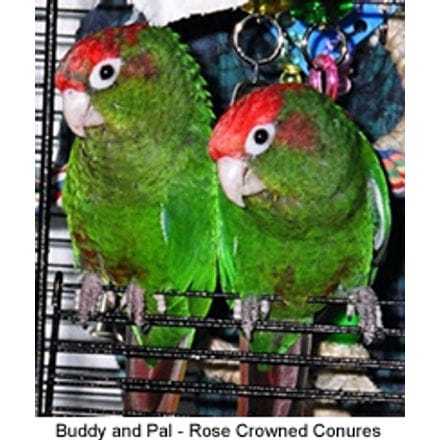
Parrots as vulnerable or endangered species
The Convention on the International Trade in Endangered Species (CITES) has made the sale of all wild caught parrot species illegal; the highly endangered species are on on the CITES appendix 1 list and all of the other parrot species are on the CITES appendix 2 list of vunerable species.
Parrot Feeding Habits
In their natural habitat, parrots feed on a variety of plant foods, buds, leaves, seeds, grains, nuts and fruit – and even insects.
Their strong bill and muscular tongue allows them to feed on fruits and break seeds that would otherwise be difficult for other animals to crack. Parrot bills have evolved the ability to crush the largest seeds.
FREE Training to Stop Your Bird's Biting
Get FREE access to Beak School – the only system designed to train your bird. Stop behavioral problems like biting, screaming, feather plucking.
Get the Free TrainingMany plants have built up chemical and mechanical defenses to ward off herbivores. However, parrots have become practically immune to the plant’s defenses. They digest clay from riverbanks to detoxify the toxic chemicals in the seed/fruit.
Alternatively, they eat small amounts of toxic seeds and combine them with a larger amount of harmless seeds, therefore substantially decreasing the potential harm.
More about the diet of parrots.
Photo, Video and/or Article contributions are welcome! You can Upload articles and images here. Thank you!
Beauty Of Birds strives to maintain accurate and up-to-date information; however, mistakes do happen. If you would like to correct or update any of the information, please contact us. THANK YOU!!!

How Long Do Parrots Live As Pets?
How Long Do Parrots Live As Pets?
The length of time that…
The length of time that parrots live as pets varies from species to species.
The African Grey Parrot has a lifespan of up to eighty years.
Amazon Parrots live anywhere from fifty to sixty years.
Macaws can live up to one hundred years.
Cockatiels typically live up to twenty years.
Cockatoos live up to seventy years.
Conure just six to eight years.
Green Wing Macaw has a lifespan of sixty years.
Eclectus Parrot will live anywhere from thirty to forty years.
Hawk Headed Parrot can live up to fifty years.
help your pet live a longer and healthier life may not be as obvious. Many times owners use a cage that is too small for the bird.
Make sure your parrot has plenty of room to move around. Take them out of their cage regularly to help them get plenty of exercise.
Parrots Life
African Gray Parrots- 40 to 60 years, or more
Amazon Parrots- 25 to 75 years
Budgerigars (Parakeets)- 5 to 18 years
Caiques- Up to 50 years
Canaries- 10 years
Cockatiels- 10 to 15 years
Cockatoos- 20 to 60 years, depending on the species
Conures- 10 to 30 years, depending on the species
Doves- 20 years or more (in the wild it is only about 1 1/2 years)
Eclectus Parrots- 30 to 50 years, or more