
Does your pet bird scream too much? While all parrots scream, there’s a difference between normal and excessive screaming. Let’s discuss how to stop your pet bird from screaming using simple techniques in the article below.
Owning a bird is an enriching experience – unless your feathered friend develops a habit of screaming day and night.
From lost sleep to complaints from neighbors, a screaming bird can be a nightmare.
Birds scream for a variety of reasons, or sometimes for no reason at all.
Thankfully, there are ways to eliminate unnecessary screaming in cockatiels, budgies, or pretty much any noisy bird.
In this article, I will explore some of the reasons why birds scream and what you can do to stop them.
FREE Training to Stop Your Bird's Biting
Get FREE access to Beak School – the only system designed to train your bird. Stop behavioral problems like biting, screaming, feather plucking.
Get the Free TrainingConures are particularly famous for screaming, so I will use them as an example.
If you are wondering how to get your cockatoo or lovebird to stop screaming, the ideas given below will apply to them as well.

Why Is My Conure Screaming?
Firstly, screaming is normal for parrots. It is not something that can be eliminated completely.
But when your bird is constantly screaming, that is a problem.
To stop such a bird from screaming, you must first find out what’s causing this behavior.
Once you’ve figured that out, you can work on the remedy.
Biting, Screaming, Hormonal Behavior?
Is My Conure Screaming for Attention?
Pet birds sometimes scream to draw attention to themselves, even if they don’t need anything in particular.
So, yes, your conure might be doing it just for your attention.
Especially if your pet has figured out that screaming gets you to come over and respond, that’s exactly what it would do.
Does it Need Food or Water?
Even a bird that’s usually quiet might start screaming if it’s hungry or thirsty.
When left for too long without food and/or water, birds start screaming for their caregiver’s attention.
In a way, this is related to what I said earlier about birds screaming when they want attention for some reason.
Sometimes, we get birds as starter pets for our children.
While kids love the idea of having a pet, they may not be very responsible about feeding one.
We need to take steps to ensure that they fill the feeding and water bowls regularly; otherwise, your bird might start screaming for food.
If your conure keeps screaming even though there’s nothing in its environment that might spook or agitate it, it might be simply because the bird needs to be fed.

A hungry bird is an unhappy bird – and screaming is par for the course for them
Is My Conure Bored?
Yes, this is another potential reason why your conure might be screaming.
In the wild, boredom isn’t much of a problem for birds.
They have plenty of activities to keep them busy and entertained during the day; foraging for food itself takes up most of their time.
However, domesticated birds must be provided with sufficient physical exercise and mental stimulation to make up for the lack of activity.
One of the best ways to do this is to train them to forage within the confines of their cage.
When other activities aren’t available, they might resort to screaming simply as a way of entertaining themselves.
Biting, Screaming, Hormonal Behavior?
Is it Because of Fear or Jealousy?
Fear is one of the main reasons why pet birds scream. As prey creatures, they are always wary of strangers, loud noises, or anything unusual.
A scared bird is very likely to scream out loud.
Similarly, parrots often tend to get very attached to their owners and might start seeing them as partners.
Watching you spend time with others or play with another pet might make your bird feel jealous.
A jealous bird expresses its feelings through various bad behaviors, including screaming and throwing stuff around.

Birds can get pretty jealous if you get a new bird in the house
Is My Conure Hormonal?
If it’s the mating season, then your conure might be screaming because it’s hormonal.
Screaming is normal hormonal behavior, and there’s nothing to worry about.
Incessant screaming, however, might indicate other issues.
Is My Conure Feeling Isolation/Separation Anxiety?
Like most parrots, conures are social animals and enjoy the company of people.
Your pet considers your family its flock, and long periods of being isolated can cause the bird severe anxiety.
In case you have to leave home for long periods, that might explain the screaming.
Even if you don’t exactly leave the bird alone at home, it might suffer from separation anxiety if it feels excluded from family activities.
FREE Training to Stop Your Bird's Biting
Get FREE access to Beak School – the only system designed to train your bird. Stop behavioral problems like biting, screaming, feather plucking.
Get the Free TrainingSocial birds like conures want to be included in everything and are eager to participate.
Biting, Screaming, Hormonal Behavior?
Is My Conure Reflecting My Own Stress?
Lastly, your conure might be reflecting your own stress.
Birds learn mostly through observation, which means their behavior is shaped by that of those around them.
Hence, if the bird is exposed to stressful behavior regularly, it will start acting the same way.
In case you happen to be stressed most of the time and end up screaming at your family or your neighbors, that’s likely where your pet picked up its habit from.
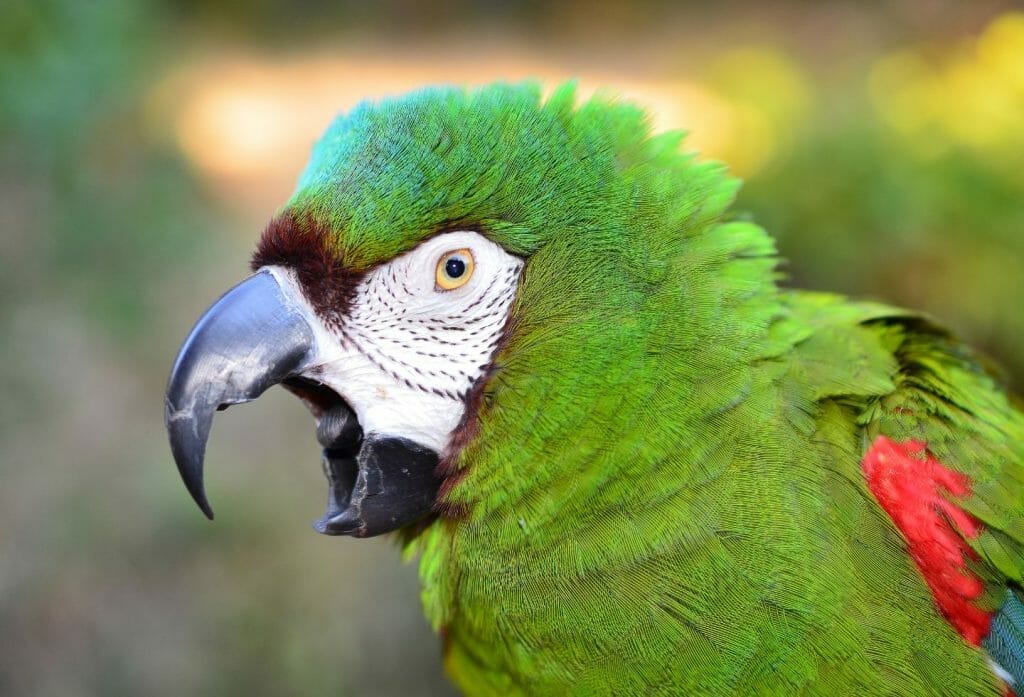
Sometimes birds just reflect your own fears and stress back at you
Consider The Circumstances Before Taking Action
Your feathered friend might be screaming for various reasons, from something as simple as seeking attention to reflecting on your own stress.
Pinpointing the exact cause requires you to evaluate the circumstances.
If you aren’t sure why your conure is screaming, try to read its facial expressions and body language to understand its emotional state.
Don’t rule out the chance of the bird suffering from a disease, either.
If it seems to be in pain, get it checked by an,avian veterinarian immediately.
Biting, Screaming, Hormonal Behavior?
Sometimes Birds Just Scream Without Reason
You may sometimes find your pet bird screaming for seemingly no reason. The bird might look quite happy and content.
Well, your assumption is correct – at times, birds scream without any reason.
It’s normal for parrots to scream occasionally.
What’s important is to understand that different parrots scream different amounts. Some are habitual screamers, while others are quieter.
In case noise would be a problem in your home, avoid getting a species that’s inherently very noisy and tends to scream a lot.
But within the limits of what is “usual” for your bird, some birds scream more than others. This is what we are exploring in the next section.

All parrots scream. Some more so than others
How Do We Make Our Pets Screaming Worse?
Most pet owners unknowingly make their bird’s screaming worse by responding to it.
Remember, any attention you pay only reinforces their behavior.
It doesn’t matter whether you try to calm down your bird or yell at it to make it stop screaming; it would see any form of attention as encouragement.
Even whispering to a screaming bird would be bad.
The reason behind this is simple – once a bird realizes that screaming gets its owner’s attention, it will scream every time it wants you to notice it.
Biting, Screaming, Hormonal Behavior?
How to Stop a Conure From Screaming
So, now you know that reacting to your conure’s screaming would only make things worse by reinforcing the bad behavior.
Does it mean you can’t stop the bird friend from screaming?
Well, not quite – there are several ways to gradually reduce screaming and replace it with more acceptable behaviors.
What You Should Not Do
Before getting to the part about what to do to stop a bird from screaming, let us check out what you shouldn’t do. It’s easy to worsen the situation by handling it the wrong way.
Hitting
No matter what, do not hit your bird for screaming (or for any reason at all).
A bird doesn’t understand the concept of punishment, to begin with, and wouldn’t realize that it’s the consequence of screaming.
Rather than stopping your conure from screaming, hitting it would only make it scream even more.
Besides, birds are small, sensitive creatures and might easily get injured.
Any form of abuse also takes a toll on their mental health and may result in aggression or other negative tendencies.
Don’t ruin your beautiful relationship with the parrot by hitting it and losing its trust.
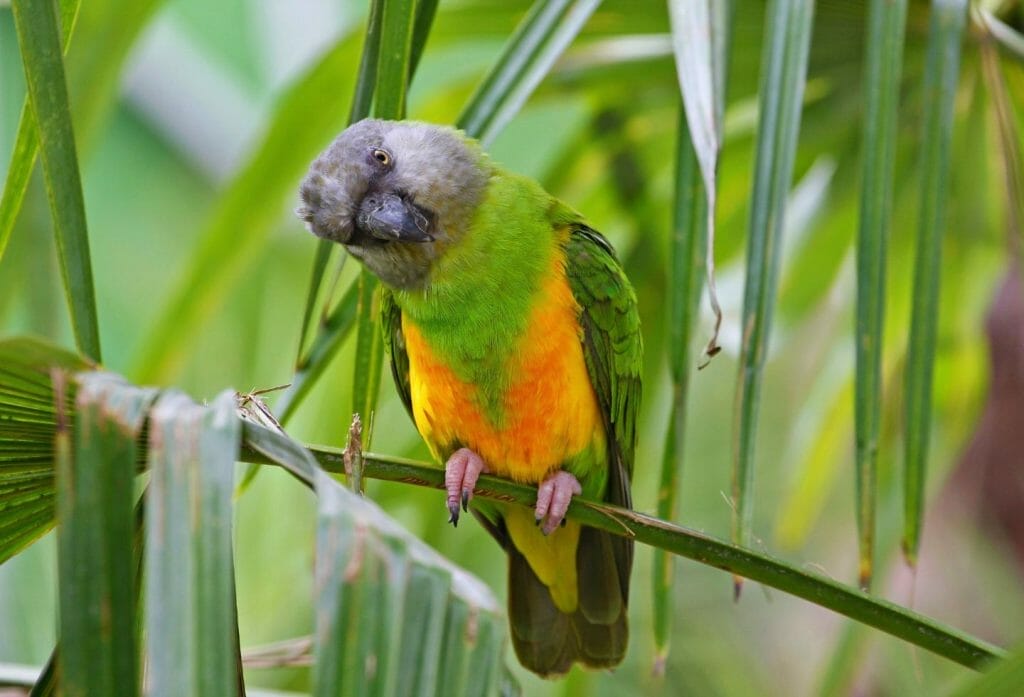
Pay Too Much Attention Every Time
As I mentioned earlier, the more attention you pay, the worse it will get.
Stop talking back to the bird or walking up to it every time it screams. Unless your conure is screaming for a valid reason, simply ignore it.
Biting, Screaming, Hormonal Behavior?
Shaking/Rattling the cage
Shaking or rattling the cage would have pretty much the same result as hitting the bird.
Parrots are typically very territorial and possessive of their cage, and owners must respect their personal space.
Shaking the cage not only makes them aggressive but also causes them severe stress.
Timeouts
A timeout cage is much smaller than the bird’s usual cage, placed in a corner away from all activity.
FREE Training to Stop Your Bird's Biting
Get FREE access to Beak School – the only system designed to train your bird. Stop behavioral problems like biting, screaming, feather plucking.
Get the Free TrainingPutting a bird in a timeout cage is one of the very few ways to punish a bird and effectively fix a behavioral issue.
To put it simply, it puts the bird in a boring environment devoid of the luxuries of its regular cage.
However, timeouts are ineffective at stopping a bird from screaming.
Putting your conure in a timeout cage requires you to pick up the bird, and doing this right after it screams will promote the behavior.
What You Should Do?
The ideal way to stop a bird from screaming may vary depending on its cause. Here are some of the solutions that you may try.
Staying Quiet and Not Paying Attention
One can’t possibly overstate the importance of staying quiet and not paying attention when your pet bird starts screaming.
Unless it’s for something that requires your attention, remain calm and ignore the screaming until it stops.

The best remedy is to stop paying attention
Effective timeout
While a timeout cage isn’t a viable solution to stop a bird from screaming, other kinds of timeouts can help.
For instance, you could cover the cage with a cloth to make it dark for a while and keep the bird from seeing what’s going on.
If you’re in the same room when your conure starts to scream, just look at it for a second and turn away.
Don’t pay the bird any attention until it stops, but turn around and reward it as soon as it does.
Biting, Screaming, Hormonal Behavior?
Thus, you’d be training your conure for its moment of silence and reinforcing the behavior.
In case you’re not in the room during the screaming frenzy, do not reenter until the bird grows quiet or displays acceptable behavior, such as whistling or chirping.
Once it does, quickly enter the room and reward it (with something that the bird likes).
Initially, you can’t expect the bird to remain quiet for long before it starts screaming again. Start by rewarding it for two seconds of silence and gradually increasing the timespan.
Redirecting Negative Behavior
Redirecting negative behavior is very effective in avian training.
This would be especially effective if your conure is screaming out of boredom.
Spend time with your feathered friend, give it enough toys, and teach it to forage. Foraging can keep birds engaged for long periods.
Identifying the Triggers
Identify the triggers that might be causing your conure to scream and list them.
Does it scream when someone, in particular, enters the room? Does it scream when it doesn’t see you for a while?
Figuring out why the parrot is screaming will help you tackle the problem at its root.
Incompatible Behavior
Teaching your bird incompatible behaviors is a great way to weed out undesirable behaviors.
An incompatible behavior is simply one that makes it impossible for the pet to carry out the behavior you’re trying to eliminate.
For instance, your conure cannot scream and whisper at the same time.
You can teach the bird to whisper and encourage the behavior through positive reinforcement.
Biting, Screaming, Hormonal Behavior?
This way, the bird would start whispering instead of screaming most of the time.
Tricks make for excellent incompatible behavior, too.
Training your bird to perform tricks like raising its wings, dancing, or simply turning around would help curb screaming.

Teaching Your Bird To Talk
This is one of the best ways to stop your bird from screaming whenever it wants attention.
Parrots are better than most birds at vocalizing, and many of them can talk by mimicking human speech.
Teaching a bird to talk is easy – just keep repeating a phrase gently when spending time with the bird.
Especially if you reinforce the bird’s habit of talking by rewarding it, the bird won’t scream as often.
Besides, it’s nice to have a talking bird!
Not All Screaming Is Bad
Now, while screaming is usually bad behavior in birds and should be ignored, there are a couple of exceptions.
Wild birds communicate with the rest of their flock through contact calls.
They have specific calls for different members of the flock and use these to call out and make sure their friends are safe when they are out of sight.
Hence, contact calling in domesticated birds is a good sign – it shows that the bird cares about you and is concerned about your well-being.
If your conure lets out a call once in a while when you’re in a different room, give out a short response to reassure it.
Biting, Screaming, Hormonal Behavior?
Parrots also tend to make a lot of noise when reunited with their human “flock,” often screaming to be heard.
Like contact calls, these require a response to show the bird your appreciation and acknowledgment, too.
Respond to your conure’s celebration by greeting the bird and interacting with it for a few minutes, but stop displaying any attention if it keeps making noise.
In both of the above cases, the screaming is positive behavior and should be reinforced through positive responses.
Other Things That Can Help
Just like us, a pet’s behavior is influenced greatly by its lifestyle.
If your bird has resorted to bad habits like screaming due to unmet physical and/or psychological needs, here are a few ways to fix it.
Sleep
A well-rested bird would be happy and content, while a bird denied adequate sleep would become cranky and scream at everyone.
Depending on their age, birds need about 8 to 10 hours of sleep every night.
Besides putting the bird back in its cage in time to allow enough sleep, owners should also make sure to provide a suitable environment.
FREE Training to Stop Your Bird's Biting
Get FREE access to Beak School – the only system designed to train your bird. Stop behavioral problems like biting, screaming, feather plucking.
Get the Free TrainingToo much noise, movement, or light would prevent your conure from sleeping properly.
Diet
Did you know that it’s possible to stop a bird from screaming by altering its diet?
Offer your conure some crunchy and healthy treats. It would get too focused on the food to keep screaming.
Alternatively, you may also give the bird a chew toy for the same result.
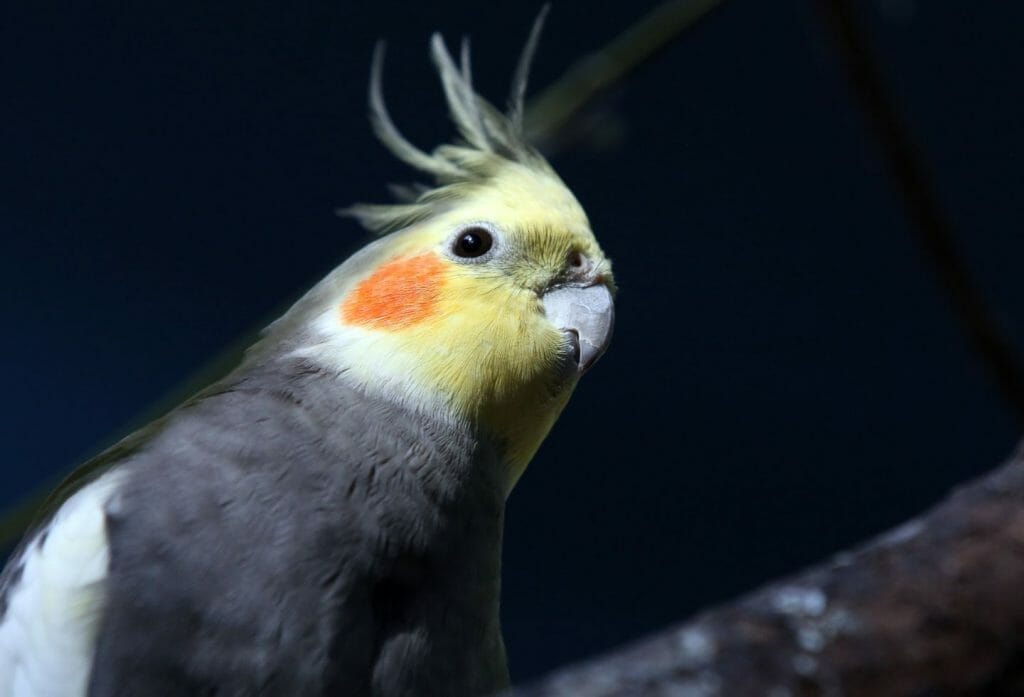
Provide the required protein, vitamins and nutrients to keep your bird healthy.
Lots of Playtime and Contact With Humans/Other Birds
Remember what I said about birds screaming due to isolation anxiety? Make sure to include your feathered friend in various daily activities.
Allow it to spend a lot of time with humans and other birds (if you have any).
Let your parrot out of the cage regularly, giving it plenty of play time.
As long as you’ve bird-proofed your home and tamed your conure, it shouldn’t be difficult at all.
Just let the bird move around, play with family members, and participate in activities.
Biting, Screaming, Hormonal Behavior?
Changing the Location of the Bird’s Cage
Lastly, consider changing the location of the cage to give your bird a change of scenery.
After all, living in the same corner of the house forever gets boring and stressful. If possible, set up an outdoor aviary for your parrot.
You should also consider taking your feathered friend on outdoor trips every once in a while.
A car or bike ride could be fun, or you could simply go on a walk with the bird.
However, make sure to secure it properly in a carrier or with a bird harness so that it doesn’t fly off or get snatched up by birds of prey.
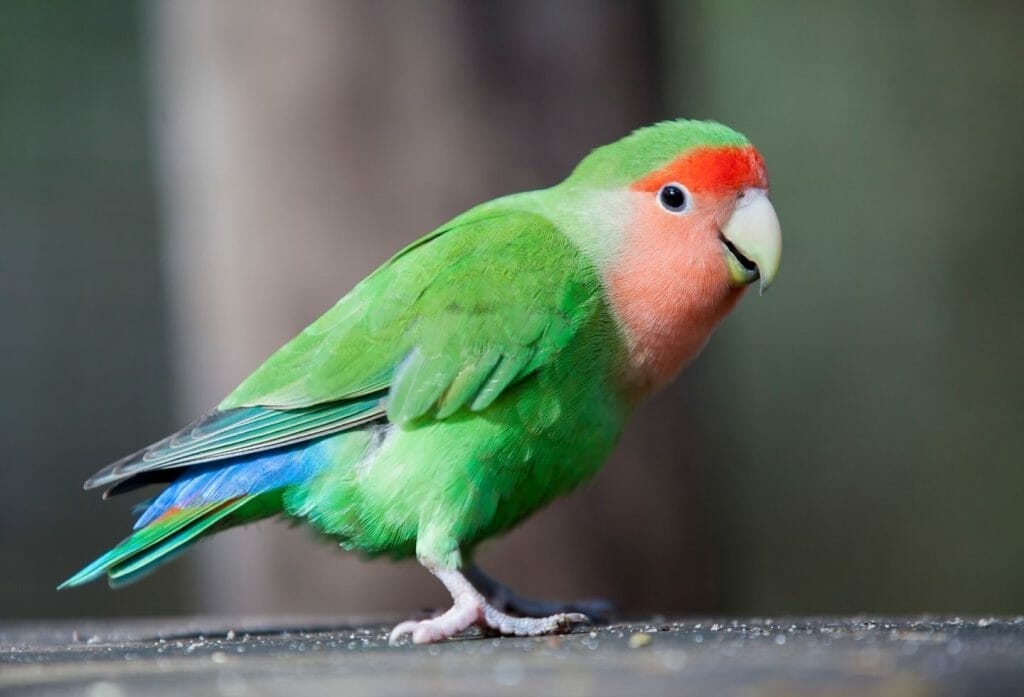
Wrapping up
To sum up, your parrot’s tendency to scream depends largely on how you respond and how the bird is treated in general.
Do not reinforce negative behaviors by giving your bird the attention it seeks.
You’re probably not so keen on enduring the loud screeching calmly, but it’s for the best.
Promote incompatible and desirable behaviors through training and positive reinforcement for long-lasting results.
This is especially important when dealing with a baby bird since behaviors rooted at a young age are hard to weed out later.
Thank you for reading.
Biting, Screaming, Hormonal Behavior?
Frequently Asked Questions
How do you shut up a noisy bird?
To stop a pet bird from screaming, it is important to stay quiet and not pay attention to the behavior.
Redirecting negative behavior, identifying triggers, teaching incompatible behaviors, and teaching the bird to talk can all help.
You can also give it timeouts – small breaks of isolation while rewarding positive behaviors.
However, not all screaming is bad, as contact calls and reunions with human “flocks” are important for birds to communicate and show care.
How do you calm down a pet bird?
Birds can become stressed due to health issues, an inadequate diet, an unsuitable environment, noise, changes, and boredom.
It is important to consult a vet for health and nutrition advice, provide a suitable environment with visual barriers and multi-level perches, reduce noise, and so on.
If there are changes that are happening to your bird’s surroundings, make sure you are not making them too suddenly.
Providing stimulating activities and toys is another way to calm down a bird.
If a bird is continuously experiencing stress, and showing signs like feather plucking and biting, contact a vet for diagnosis and treatment.
Why won’t my bird stop screaming when I leave the room?
A parrot that screams excessively when you leave the room is exhibiting abnormal behavior and is likely seeking attention.
It is important not to reinforce this behavior by responding to or punishing the bird physically.
If the bird keeps screaming despite receiving enough socialization time, there may be an underlying reason such as fear or a past association.
One way to do this is to discourage screaming by responding with a low, soothing sound and rewarding the bird when it mimics this sound instead of screaming.
Why does my bird scream in his cage?
When a bird constantly screams, it is a problem that needs to be addressed. The cause of the behavior must first be identified in order to find a remedy.
Reasons for screaming may include attention-seeking behavior, hunger or thirst, boredom, fear or jealousy, hormonal behavior, isolation or separation anxiety, and reflecting the owner’s stress.
Providing mental and physical stimulation, regular feeding and watering, and social interaction can help alleviate screaming in pet birds.
