
In this guide, we discuss incubation and egg-laying in cockatiels. Read on to find detailed instructions on when to mate, how long it takes to incubate, how to candle the eggs, and more.
Whether you’re a breeder or simply own a couple of cockatiels, setting the right conditions and environment for egg-laying is essential to have healthy chicks.
FREE Training to Stop Your Bird's Biting
Get FREE access to Beak School – the only system designed to train your bird. Stop behavioral problems like biting, screaming, feather plucking.
Get the Free TrainingNon-hatched eggs can make cockatiels sad and depressed. Here’s a handy guide on how you can encourage egg-laying and allow your cockatiels to hatch them.
FREE Training to Stop Your Bird's Biting
Get FREE access to Beak School – the only system designed to train your bird. Stop behavioral problems like biting, screaming, feather plucking.
Get the Free Training
Do Cockatiels Lay Eggs?
Like all birds, cockatiels lay eggs. Cockatiels are motivated to lay eggs after bouts of heavy rainfall as this signifies a plentiful harvest in the future.
If you’re new to cockatiel behavior, here’s how you can know what stage your ‘tiels are in.
Courting and mating behavior:
Cockatiels are among the few birds that are monogamous and remain with the same partner through each breeding season.
They form relationships early on and, thus, do not spend any time finding or attracting a mate.
Before mating, both sexes get very vocal. Female cockatiels will hold their tails erect, and males will strut with their wings open.
Pair of cockatiels will also identify a potential nesting site before engaging in mating. Males will check out the place and deem it safe to nest.
For domestic ‘tiels, you can encourage mature cockatiels to mate by providing them with nesting boxes.
Pre-egg laying stage:
After mating, female birds may lay eggs within as short as four days or even after a month. There are many ways to recognize that your bird is about to lay eggs:
- Female birds prepare to nest and incubate eggs. You will notice them releasing droppings less often. The droppings will be much larger in size as well.
- Just before egg-laying, the bird’s cloaca (opening through which eggs are laid) will swell and have the outline of a round egg.
- The female will start sitting within the nesting box and only emerge to feed and eliminate waste.
- She will be bathing more often and eating soft food and high-energy grains to get the necessary moisture and vitamins for binding the eggs.
Egg-laying:
Cockatiels lay up to 1 or 2 clutches of eggs every year. Each clutch can contain 4 to 7 eggs, laid over a period of days.
If eggs are broken or non-viable, females can lay more eggs to compensate. However, for this, it is important that she receives nourishment and mineral blocks.
Early eggs may be odd-shaped or have blood on them – which is totally normal.
However, if you see your bird suffering from blood loss or laying broken eggs with blood on them – take them to the vet! It could be a case of egg-binding which needs immediate attention.
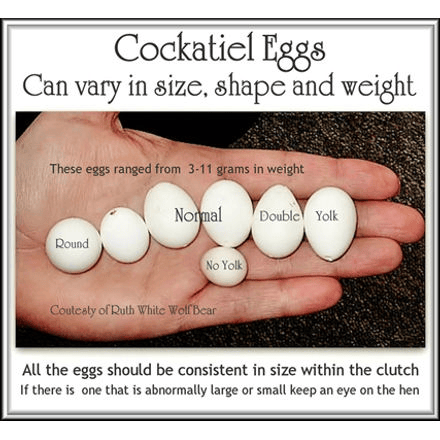
The cockatiel pair will incubate the eggs for a period of 17 to 23 eggs, leading to around 90% of the eggs hatching.
You can start candling around five days after egg-laying and eliminate non-viable eggs. Refer to our complete guide on egg candling for more details.
If you do not candle the eggs, eggs that do not hatch after a month are not viable. You should eventually remove it to discourage the mother from incubating it further until it decays.
Can Male Cockatiels Lay Eggs?
As with all birds, only females lay eggs. No male cockatiels are capable of laying eggs on their own.
They do, however, help to fertilize eggs and eventually raise chicks. Females can lay eggs, both with and without males. But only fertilized eggs will lead to chicks.
At What Age Do Cockatiels Lay Eggs?
Male cockatiels reach sexual maturity at around 13 months of age. For females, this is around 18 months of age.
You should not encourage pairs to mate before this, as it can be harmful to the female’s health.
Younger males should also not be encouraged to mate as they may not help incubate the egg or raise the chick, overburdening the female.
To prevent mating, do not give your cockatiels any cardboard boxes or nesting spaces until they are mature. Nesting sites encourage even younger cockatiels to mate.

Can Cockatiels Lay Eggs Without a Male?
Not all cockatiel eggs are viable. A female without a male can still lay an egg.
However, it will be a non-fertilized and non-viable egg that will not hatch into a chick. For a viable egg, female cockatiels have to mate with a male.
How Many Eggs Do Cockatiels Lay?
A regular clutch can contain 4 to 7 eggs. However, female cockatiels can keep laying eggs to replace non-viable or broken eggs.
As long as she has a healthy diet to sustain it, females lay as many eggs as needed for a proper clutch.
How Often Do Cockatiels Lay Eggs?
Cockatiel chicks mature and leave the nest at around five weeks of age. Hence, there are two breeding cycles every year.
Cockatiels will lay two clutches yearly. Between each season, a rest period of around four months is present.
If the breeding season goes on for long, then the pair might even have only one clutch in a year.
How Long Does It Take For A Cockatiel To Lay An Egg?
The usual cockatiel gestation period can range from as little as four days to a maximum of 30 days. This is because cockatiel spermatozoa have a long shelf life.
Females can store it for up to 30 days, leading to very late-stage eggs as well.
Once she starts laying eggs, she lays one egg every two days and keeps doing so for a period of around two weeks.
How To Incubate Cockatiel Eggs?
Adult cockatiels will incubate their own eggs. During this time, you should ensure that they have enough energy-rich food, mineral blocks, and water.
Natural incubation
Since eggs can remain viable for up to 10 days even without incubation, cockatiels usually begin the process together after 2-3 eggs are laid.
Once incubation begins, the eggs must be constantly incubated. Any cooling for longer than 10 minutes can have an adverse effect on the developing chick.
As a breeder, it is best to start candling the eggs after a week and eliminate the ones that are dead. Both sexes incubate eggs and alternate between day and night time.
A single bird cannot incubate eggs as it will be difficult for them to leave for food and rest.
To candle the eggs, remove them while the cockatiels are switching incubation times. Or you can gently guide them outside the box to eat while removing the eggs.
FREE Training to Stop Your Bird's Biting
Get FREE access to Beak School – the only system designed to train your bird. Stop behavioral problems like biting, screaming, feather plucking.
Get the Free Training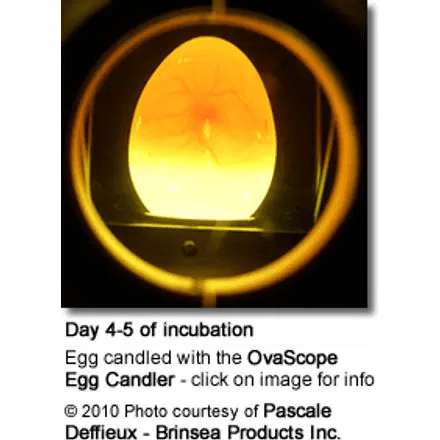
For domestic and socialized cockatiels, this won’t be a problem. It’s best to announce yourself with a tap, vocally or visually, to prevent them from getting startled.
Keep a record of the candling and hatching process for each egg. Also, provide your birds with soft food that is high in energy during this time.
The normal incubation period takes the same time as the artificial incubation process. After four weeks, if you still see unhatched eggs, throw them out to prevent the female from fussing about it further.
Do Male Cockatiels Sit on Eggs?
Both sexes incubate the eggs. Sitting on eggs is a tiring process. Males and females alternate between day and night time and incubate for 12 hours each.
Males occupy the nest during the daytime, and females during the night. Males stand guard during nighttime.
If your male is not incubating the eggs, it probably means he is too young to mate. You should artificially incubate the eggs as it will be too much for your female to do it alone.
My Cockatiel Laid an Egg on the Cage Floor – What To Do?
First, gauge if the egg is fertile or not. If your female does not have a male in her cage, the egg is infertile, and it’s best to throw it away, or she might start incubating it falsely.
If there is a chance that it is fertile, place a nesting box with soft rags inside the cage. Place the egg within it to encourage your female to go back into her nest.
However, if your bird is too young, you should still remove the egg to discourage mating.
Cockatiel Egg Candling
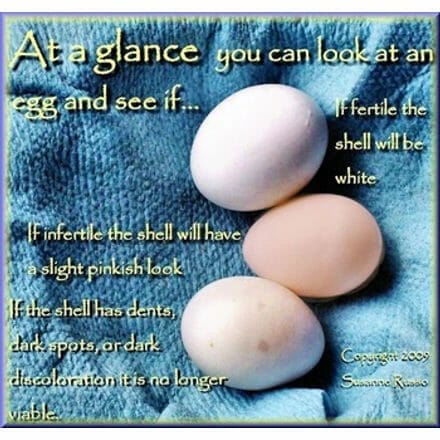
Fertile cockatiel eggs will be a bright, uniform white within a few days of incubation. Dull, grey eggs, and eggs that remain pinkish or beige are dead.
For candling, place the egg against the bright light of a candler. Here’s how to identify egg viability during candling at around 8 to 10 days of incubation:
- The egg is clear – Either too early to develop embryo or early death or non-viable from the start
- Dark embryo, splotchy or without details – embryo death
- Mass with red blood ring – embryo death
- Egg with blood veins and movement – on track to hatching
- Dark mass – embryo death from chilling
Another thing to look for changes in the air sac size. Observe the normal air sac for each egg and record it.
- Smaller air sac – the shell is absorbing water from humidity, and the chick may drown.
- Large air sac – low moisture, the chick may stick to the egg and die
- Tilted air sac– the chick is turning and getting ready to pip
- Bubbles within the egg-air sac is ruptured, causing early death.
You can also perform water candling. Take a bowl of water between 100 to 104°F and place the egg in it gently.
An alive chick will cause the egg to bob in the water. Remove it instantly, dry it with a towel and place it back.
Do not water-candle for longer than a minute. Water candling is often best for dark-colored eggs. If eggs have pips, do NOT use water-candling as this can asphyxiate the chick.
How Long Do Cockatiel Eggs Take To Hatch?
How To Tell if a Cockatiel Egg Will Hatch?
Just before hatching, chicks will use a special egg tooth to break out the shell. Hatching can take a few hours or a couple of days, depending on the chick.
This process is called pipping and is essential for the chick to be able to make its way to life. Do not assist chicks in pipping. Pips can also appear early on, and this signifies a live chick inside.
How To Take Care Of Cockatiel Eggs
If your ‘tiel has abandoned the eggs, the situation needs to be assessed, and you can incubate them artificially.
For this, you need an incubator with temperature settings. It’s best to use Forced-air incubators as these maintain humidity better.
Artificial Incubation
Set the temperature to 99.5°F and humidity at 56%. Based on studies, this range shows the best hatching percentage of around 81%.
Your incubator should also turn the eggs every 2 hours to prevent overheating in any area.
FREE Training to Stop Your Bird's Biting
Get FREE access to Beak School – the only system designed to train your bird. Stop behavioral problems like biting, screaming, feather plucking.
Get the Free Training
After around a week of incubation, remove the eggs one by one. Candle them by placing a bright light behind them.
This will make the veins and growth within the egg visible. There will be some loss during incubation. Remove dead or non-viable eggs which don’t show any growth.
You can refer to these illustrations of a developing chick in an egg for guidance. The incubation time should be an average of 18 days.
You can document the process using our Breeding Records, available in both PDF format here and Word format here.
Frequently Asked Questions
Cockatiel Eggs Not Hatching After 21 Days, what to do?
Observe it for a period of 28 days before throwing it away as some eggs may incubate late. You can also candle the egg to see if there has been a late-stage death within. If it’s a dead egg, throw it away.
What temperature do I incubate cockatiel eggs?
For artificial incubation, a temperature of 99.5°F is the best. Set the relative humidity to 57% throughout, followed by egg turning every couple of hours. Any temperature that is slightly higher or lower may impact the embryo development process.
How many eggs does a cockatiel lay for the first time?
Cockatiels lay around 4 to 7 eggs. First-time egg-layers may have eggs that are weirdly shaped or a bit bloody but it is not concerning unless the blood amount is noticeably large. The odd egg can still hatch into a normal chick.
How do you know when a cockatiel is going to lay eggs?
Some cues to look out for in female cockatiels are increased time spent in the nesting boxes, an appetite for soft foods, more frequent baths, and swelling of their rear side. Before this, you might even have caught them mating.
Wrap Up
We hope you found all the necessary information here to go ahead and watch your birds have chicks. And step in if needed.
You can also store eggs for some time by following our egg storage instructions.
Thank you for reading!

Thank you. I have a pair and the male wont sit the eggs. He is about five years old. Im going to try incubating them for his shift.. thank you I never knew that was an option.
You’re welcome! We hope it works out for you 🙂
I have the nesting box in the cage with the male bird . Do I need to remove the box away from him and put them in a cage by their selves with their mother ?
Hi my 4 year old female laid one egg 3 days ago. She is in a cardboard box with little nesting material as she wouldn’t go in there once I added shredded paper. She slept in the box the first night and has been going in periodically to sit on the single egg, although after the first night she has slept in her cage away from the egg. She will not let the male near the nest, although he did go in without her and did not sit on the egg. ( just sniffed it a few times) I’m not sure what to do next as this hasn’t happened before. I don’t know if it’s fertilized as I have not seen them mate.
Any help would be appreciated.
Tracy
My female cockatiel havent any husband and after 6 days have two eggs
Is it true that maybe born???