
Amazon parrots are large beautiful birds and make great pets.
FREE Training to Stop Your Bird's Biting
Get FREE access to Beak School – the only system designed to train your bird. Stop behavioral problems like biting, screaming, feather plucking.
Get the Free Training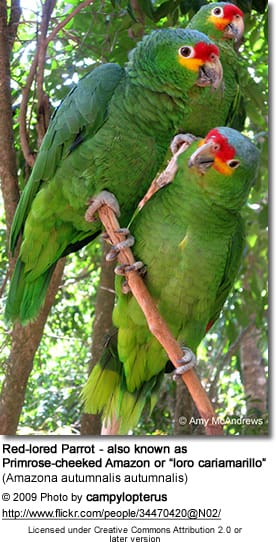
Overview
Amazon Parrots originate from South America. In their natural habitats, these sociable birds are often seen in flocks or family groups.
These loyal, affectionate and fun-loving parrots have grown to be one of the most popular companion birds around the world.
These parrots are very intelligent and playful; and they are in demand for their excellent mimicking abilities in particular, including the ability of some of them to sing quite beautifully with exceptionally clear voices. As is the always the case with parrots – the mimicking ability between the species and even within a species will vary greatly.
However, the other side of the coin is that they are also high-maintenance and need (and deserve) devoted owners who are willing to provide safe and FUN environments with lots of entertainment for their feathered family member(s).
FREE Training to Stop Your Bird's Biting
Get FREE access to Beak School – the only system designed to train your bird. Stop behavioral problems like biting, screaming, feather plucking.
Get the Free TrainingDistribution
The Amazon parrot is native to the New World ranging from South America to Mexico and the Caribbean.
In the wild, they feed primarily on nuts and fruits, supplemented by leafy matter. They are also likely to consume some insects and small animals, particularly during the breeding season.
The amazon species most commonly kept as pets include the following:

- Blue-fronted Amazon
- Double Yellow-head Amazon
- Lilac-crowned Amazon
- Mealy Amazon
- Mexican Redhead or Green-cheeked Amazons
- Orange-winged Amazon
- Panama Amazon
- Red-lored Amazon
- White-fronted Amazon
- Yellow-crowned or Yellow-fronted Amazon
- Yellow-naped Amazon
Complete Listing of All Amazon Species
- Bahamas Amazon
- Belize Yellow-headed Amazons
- Black-billed Amazons
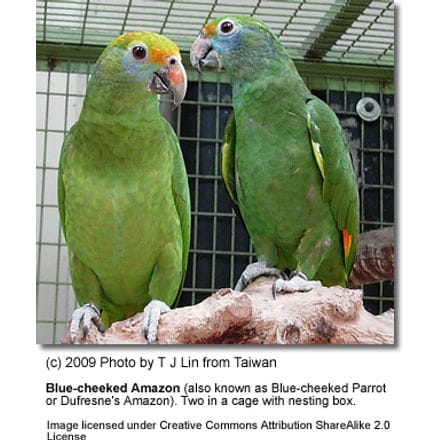
- Blue-cheeked Amazon / Dufresne’s Amazon (Amazona dufresniana dufresniana)
- Blue-crowned Amazons / Guatemalan Amazons
- Bodinus’ Amazons
- Chapman’s Mealy Amazons
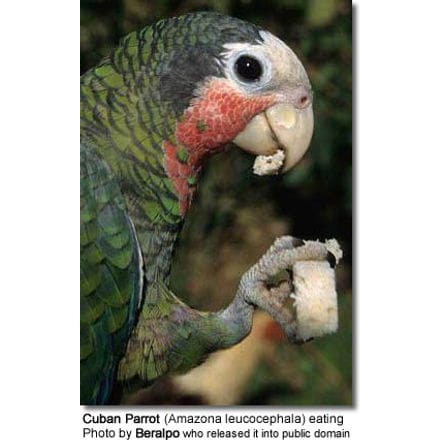
- Cuban Amazons and Western Cuban Amazons + Cayman Brac Amazons, Cayman Parrots or Cayman Islands Amazons / Parrots
- Culebra Island Amazons
- Diademed Amazons
- Double Yellow Head Amazon / Double Yellow Headed Amazon
- Equador Amazons
- Festive Amazons
- Greater Yellow-headed Amazons
- Green-headed Amazons
- Guadeloupe Amazons: CITES Status: EXTINCT Distribution: N/A – Extinct species.
- Hispaniolan Amazons
- Imperial Amazons
- Kawall’s Amazon
- Lilac-crowned or Finsch’s Amazons (Finschi) . Finch’s Amazon and Sonora Lilac-crowned Amazons
- Lilacine Amazons
- Marajo Yellow-headed Amazons
- Martinique Amazons: CITES Status:- EXTINCT Distribution: N/A – extinct species
- Mealy Amazons (Farinosa) + Plain-colored Mealy Amazons + Costa-Rica Mealy Amazons
- Natterer’s Amazons
- Orange-winged Amazons + Tobago Orange-winged Amazons + Micra Orange-winged Amazons
- Panama Yellow-fronted Amazons
- Puerto Rican Amazons
- Red-capped Amazons
- Red-crowned Parrot / Amazon / Green-cheeked aka Red-crowned Amazons, Mexican Red Headed Parrot (Virididgenalis) Mexican Red Headed Amazon
- Red-lored Amazons aka Yellow Cheek Amazon
- Red-necked or Blue-faced Amazons
- Red-spectacled Amazons
- Red-tailed Amazons
- Red-topped / Red-crowned / Red-Browed Amazon
- Saint Lucia Amazons
- Saint Vincent Amazons
- Salvin’s Amazons
- Scaley-naped Amazons
- Tucumán Amazons
- Vinacea Amazons / Vinaceous Amazons
- White-fronted Amazons / Spectacled Amazons + Sonora White-fronted Amazons + Lesser White-fronted Amazons
- Yellow-billed Amazons + Jamaican Yellow-billed Amazons
- Yellow-crowned Amazons / Yellow-fronted Amazons
- Yellow-faced Amazons (Formerly Amazon, now considered Pionus)
- Yellow-headed / Double Yellow-headed Amazons
- Yellow-lored Amazons / Yucatan Amazon
- Yellow-naped Amazons / Golden-naped Amazons + Roatan Yellow-naped Amazons – Honduras Yellow-naped Amazons
- Yellow-winged Amazons
- Yellow-shouldered Amazons / Rothschild’s Amazons
Description
Most amazon parrots are predominantly green, with accenting colors that depend on the species and can be quite vivid.
They are known for their exceptional vocal abilities, playfulness, and dexterity with their feet. They are very loyal, loving companions; having them is somewhat like having a two-year-old-human child in ability and temperament for 50-plus years.
FREE Training to Stop Your Bird's Biting
Get FREE access to Beak School – the only system designed to train your bird. Stop behavioral problems like biting, screaming, feather plucking.
Get the Free TrainingHowever, some are aggressive (usually during their mating time), and they all require a lot of attention when kept as pets. Parrots require more attention and care than domesticated pets such as dogs or cats, and are not for the inexperienced bird owner.
All parrots need a lot of stimulating activities to keep from being bored and terribly destructive to themselves and their surroundings. In particular, since Amazons are cavity nesters in the wild, their desire to chew wood is strong, and they need to be provided with destructible toys to satisfy this innate urge.

Amazons as Pets
They make great pets for the RIGHT home.
Great large parrots – with the complexity, time commitment that goes with owning a large parrot. People who are either inexperienced or unwilling to spend time on training / socializing a parrot will eventually cause (or allow) the parrot to become very nippy and overly noisy.
A bored Amazon parrot will not thrive, nor will a owner derive a lot of pleasure from a pet that has developed behavioral issues. Once those are established, casual / inexperienced bird owners would not be able to easily reverse them. Generally speaking, larger parrots are basically best kept by those that understand their needs.
FREE Training to Stop Your Bird's Biting
Get FREE access to Beak School – the only system designed to train your bird. Stop behavioral problems like biting, screaming, feather plucking.
Get the Free Training| Chart provided by Dr. Rob Marshall – https://www.birdhealth.com.au) |
| Size: Up to 40cm |
| Pet Status: Very Good |
| Talking Ability: Excellent |
| Noise Level: Very High |
| Lifespan: Up to 60 years |
| Breeding Ability: Very Good |
| Number of Eggs: 2-4 eggs |
| Incubation: 29 days |
| Compatibility with other species: Mix well with other parrots, especially Conures. |
| Feeding: Seed and Fruit Eaters |
| Sexing: Surgical or DNA sexing is required. |
The prospective owner needs to make the necessary adaptations to their home, such as:
- bird proofing the environment
- providing a cage or bird room of a suitable size, and
- ensured that their pet will find plenty of things to do when the owners are unavailable
Once that has taken care of, the decision has to be made whether to adopt a rescued bird or buy a younger parrot. This is the time to contact local rescue organizations and check out the local classifieds. If no suitable birds are available, it is recommended to contact local breeders. Hand-raised, well-socialized birds are always the best choice.
Some knowledge of bird training and behavior is strongly recommended. These parrots are generally easily trained and are well known for their excellent mimicking ability. Amazons that are not trained can become aggressive and are susceptible to other behavioral problems.
Training and Behavioral Guidance:
- Amazon Parrots generally present challenges, such as excessive screaming or chewing – especially at certain stages in their life. They do discover their beaks as method of “disciplining us” once they are out of the “baby stage” and they can generally be somewhat naughty, and it really is important to learn to understand them and to guide their behavior before an undesirable behavior has been established. Undisciplined parrots will chew on electric wiring potentially causing house fires. They regard anything in your home as a “toy” that can be explored and chewed on; destroying items that you may hold dear or are simply valuable. Even a young bird that has not been neglected and abused requires proper guidance; this becomes even more challenging when it involves a rescued bird that may require rehabilitation.

Biting and Hormonal Behavior: Dominant Behavior: They are likely to discover their beaks as a method of “disciplining us” once they are out of the “baby stage.” It really is important to learn to understand them and to guide their behavior before an undesirable behavior has been established.
- Training is vital to stop this aggressive behavior.
- Hormonal Aggression: They are also known for their “hormonal” aggression phase. This phase usually appears between the ages of 5 to 12 years. During this time there will be one to two years in which they are likely to be very aggressive. Fortunately, once they go through this, they generally settle down with little or no aggression shown outside the breeding season – with some aggression, but to a lesser degree, when they are in breeding condition. These parrots going through that stage are difficult to handle for many but the most experienced amazon owners. Species such as Lilac Crowns and Mealies are less excitable than other amazon species during the breeding season. Females tend to be calmer than males during this phase. An attack by a hormonal male can be vicious and will not be limited to one bite.
- Many bird owners are bewildered by the fact that their previously so cuddly pet suddenly turns on them – their primary caretakers. To add insult to injury, their pet may pick another family member as their favorite. Dr. Jill M. Patt – Practicing Veterinarian in Mesa, Arizona, describes this being similar to a wild bird leaving its parents and choosing a mate. She suggests the following ways of dealing with it:
- Understand that this is a natural behavior.
- Have the family member the bird has picked limit their interaction with your bird, spend time with the bird when that family member is absent, and ensure that only you are the one to provide all favorite treats and activities.
- The environment can also be altered somewhat to attempt to reduce breeding behavior. Limiting the daylight hours to mimic a winter sun will often help.
- In some instances, the vet may prescribe drugs that balance out a pet’s hormones.
- Managing Hormonal Behavior in Birds

Training Resources:
- Web Resources: I put together web resources for you to help you understand your pet bird and properly direct him. Please visit the following website to learn more about parrot behavior and training.
More Amazon Parrot Information
- General Information about Amazon Parrots
- Amazon Parrots as Pets
- Amazon Parrot Species
- Amazon Parrot Photo Gallery
- Amazon Health Problems / Diseases
- Amazon Diet & Nutrition
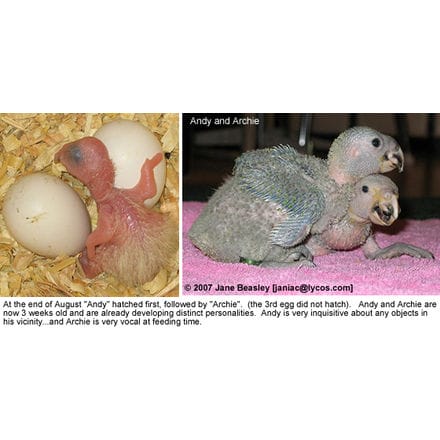
- Incubation Data
Beauty Of Birds strives to maintain accurate and up-to-date information; however, mistakes do happen. If you would like to correct or update any of the information or even submit an article or pictures, please contact us. THANK YOU!!!
